1
 →

RAGFlow is a leading open-source Retrieval-Augmented Generation (RAG) engine that fuses cutting-edge RAG with Agent capabilities to create a superior context layer for LLMs
infiniflow/ragflow is an open-source project on GitHub, mainly written in Go. RAGFlow is a leading open-source Retrieval-Augmented Generation (RAG) engine that fuses cutting-edge RAG with Agent capabilities to create a superior context It currently holds 93,175 stars and 11,178 forks with 1,303 open issues, and was last pushed on 2026-10-30 (repository created 2023-12-12).
Git Homed tracks it on the AI Agent Skills Trending board and on the AI AI Agent Skills Trending list.

RAGFlow is a leading open-source Retrieval-Augmented Generation (RAG) engine that fuses cutting-edge RAG with Agent capabilities to create a superior context layer for LLMs. It offers a streamlined RAG workflow adaptable to enterprises of any scale. Powered by a converged context engine and pre-built agent templates, RAGFlow enables developers to transform complex data into high-fidelity, production-ready AI systems with exceptional efficiency and precision.
Try our cloud service at https://cloud.ragflow.io.
For local deployment, see Local Deployment.
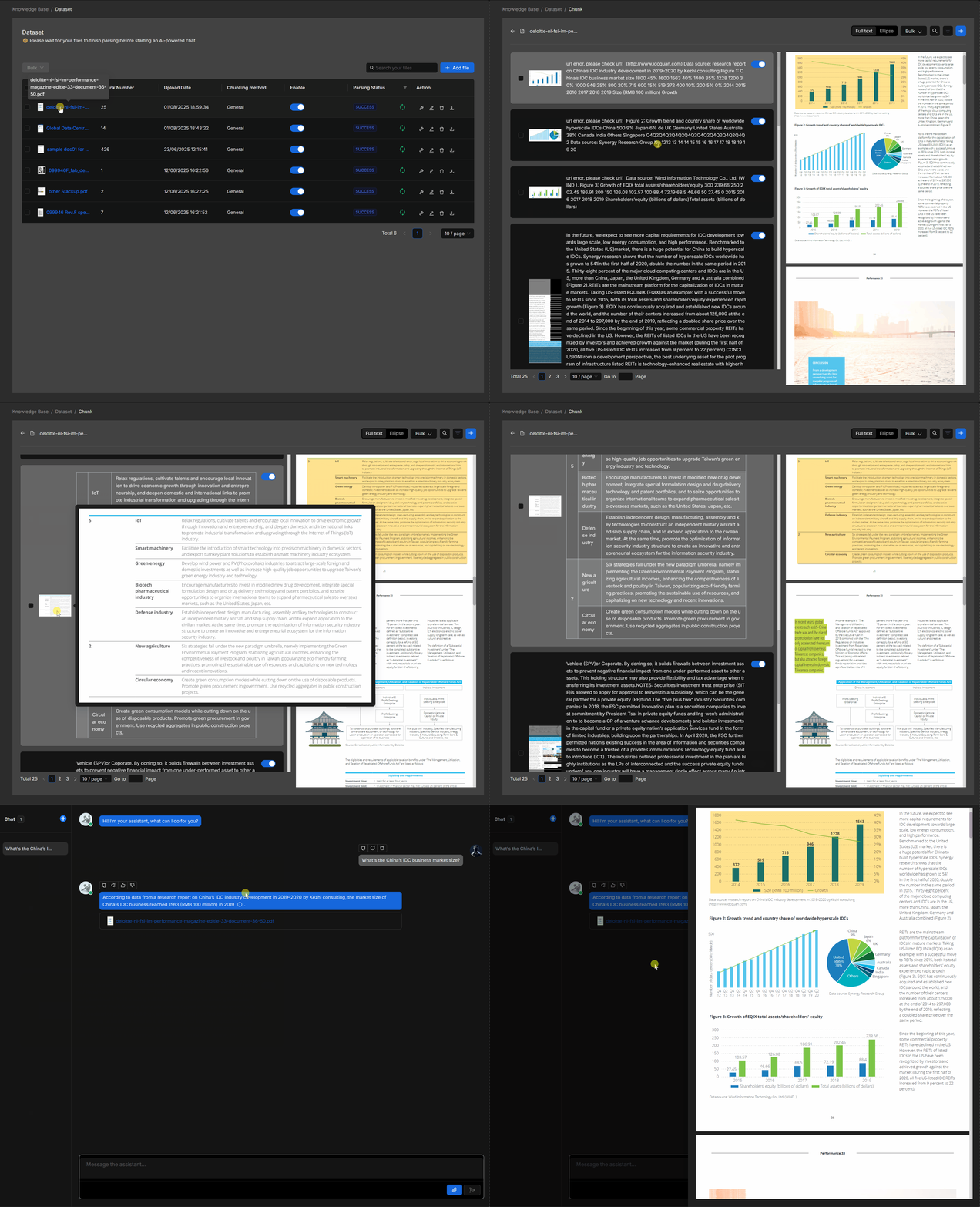
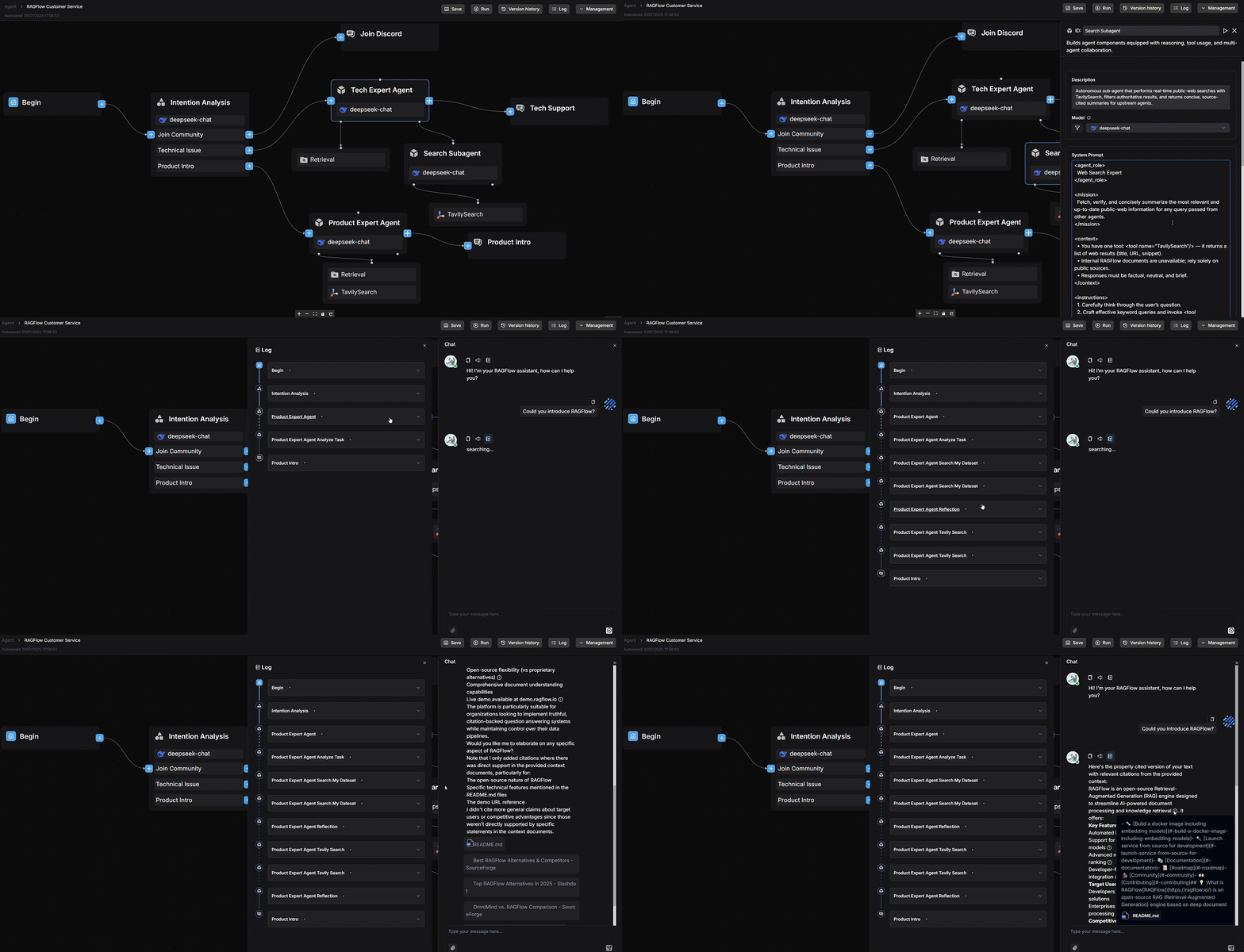
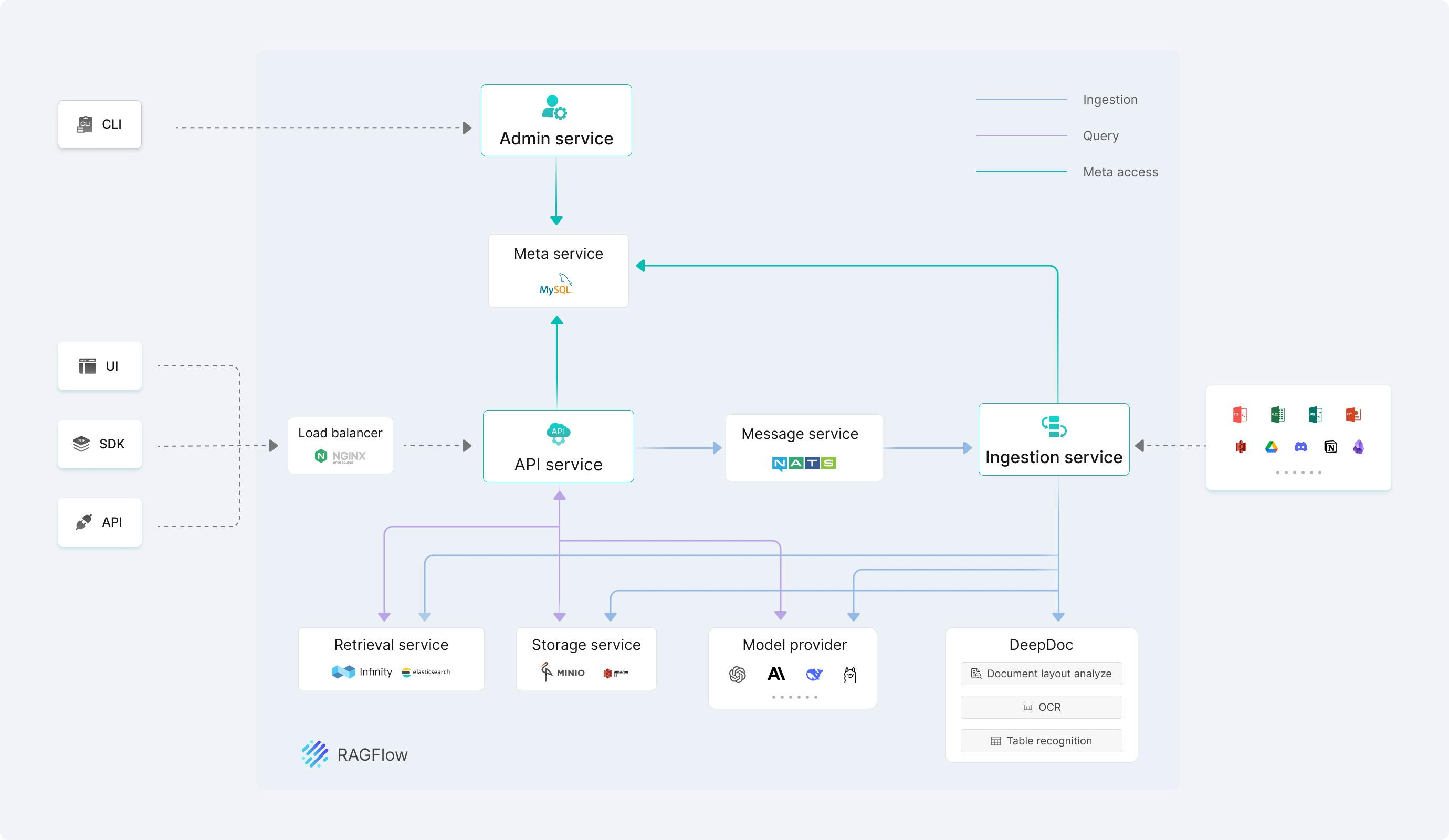
Local deployment supports both Docker deployment and launching from source. Docker is suitable for quick evaluation, integration testing, and production deployment, while launching from source is intended for RAGFlow development and debugging. Docker deployment does not require a Go compiler. Launching from source requires the Go version specified in go.mod; frontend development additionally requires Node.js and npm.
[!TIP]
If you have not installed Docker on your local machine (Windows, macOS, or Linux), see Install Docker Engine.
1. If using Elasticsearch, set vm.max_map_count on the Docker host to at least 262144. This step is usually unnecessary with Infinity:
> To check the value of vm.max_map_count:
>
>
   > sysctl vm.max_map_count
   >
> # In this case, we set it to 262144:
> sudo sysctl -w vm.max_map_count=262144
> vm.max_map_count value in /etc/sysctl.conf accordingly:
>
> > vm.max_map_count=262144
> git clone https://github.com/infiniflow/ragflow.git
Enter the Docker deployment directory.
cd ragflow/docker
Check out the v1.0.0 release tag.
git checkout v1.0.0
Start the RAGFlow services and their dependencies.
docker compose -f docker-compose.yml up -d
With the default MySQL configuration, the image entrypoint runs database migrations before starting Admin, Syncer, Ingestor, API, and other services.
> In the RAGFlow open-source 1.0 release, DeepDoc uses CPU inference for layout analysis, OCR, and table recognition.
4. Check the server status after startup:
Use docker ps to check the dependency services. After the dependencies show healthy and the RAGFlow container remains running, use the HTTP endpoint to determine whether RAGFlow is ready. The RAGFlow container itself does not define a Compose healthcheck.
curl -f http://localhost/api/v1/system/healthz
After receiving an HTTP 200 response, open the Web UI. If you changed SVR_WEB_HTTP_PORT, replace the port in the health-check URL accordingly.
If startup fails, inspect the container logs:
docker logs --tail 50 ragflow-cpu
> With the default settings, you only need to enter http://IP_OF_YOUR_MACHINE (without port number), because the default HTTP serving port 80 can be omitted when using the default configuration.
6. After signing in, add an LLM, embedding, and reranker on the model provider page, including the model name, service address, and API key.
> For details, see llm_api_key_setup.
_The show is on!_
See the Quickstart guide for details.
Docker deployment uses docker/.env and docker/docker-compose.yml. Configure the image, ports, passwords, document engine, and model image source as described in the Docker configuration guide. For platform support (note that macOS is not currently supported), see the Go Docker image build and platform support guide. To build the Docker image from source, see the Go Docker image build and platform support guide.
For document-engine changes, configuration updates, restarting services, and retaining or removing existing data, follow the Docker configuration guide.
1. Clone the repository and install the Go version specified in go.mod (currently Go 1.27), Clang 20, LLD 20, CMake ≥ 4.0, and PCRE2 development files. Go services depend on CGO and native static libraries; build.sh sets the required build parameters.
   git clone https://github.com/infiniflow/ragflow.git
   cd ragflow
2. Run the dependency download script once to prepare everything the local Go server needs to build, run, parse documents and count tokens (download_dev_deps.py fetches the native static libraries and the runtime resources — cl100k vocabulary, DeepDoc .ort weights, embedding tokenizer assets):
uv run tools/scripts/download_dev_deps.py
This is the local-dev one-stop: after one run the environment is ready, and already-present files are skipped so re-running never re-downloads. The image-facing counterpart deps/download_deps.py fetches the same runtime resources and skips the native .a files — run it only when building the dependency image or in CI, not for local development.
download_dev_deps.py pulls and unpacks pdfium, pdf_oxide, office_oxide, and onnxruntime under ~/ragflow-native-libs, and writes the cl100k vocabulary, DeepDoc models, and embedding tokenizer assets under deps/. It is a Python script; uv run installs its declared dependencies (requests and huggingface-hub) automatically. Skip this step if you have prepared the same resources by other means. When started from the repository root, Go services automatically find internal/rag/res/deepdoc; to start from another directory, set DEEPDOC_MODEL_DIR to its absolute path.
3. Build the services:
./build.sh --all
4. Start the local dependency services and make sure the hosts and ports in conf/service_conf.yaml point to addresses accessible from the host. If using Elasticsearch, first set vm.max_map_count on the Docker host to at least 262144.
   sudo sysctl -w vm.max_map_count=262144
   docker compose --env-file docker/.env -f docker/docker-compose-base.yml up -d --wait es01 mysql minio nats kvrocks
5. Migrate the database:
./bin/ragflow_server --migrate
6. Start the four services in four separate terminals:
Terminal 1: start Admin on port 9381.
./bin/ragflow_server --admin
./bin/ragflow_server --ingestor
Terminal 3: start Syncer.
./bin/ragflow_server --syncer
Terminal 4: start API on port 9380.
./bin/ragflow_server --api
The startup modes work as follows:
--migrate: Runs database migrations and exits when complete.--admin: Starts the Admin service for management and initialization operations.--ingestor: Starts the Ingestor service for data ingestion and parsing tasks.--syncer: Starts the Syncer service for external data source synchronization tasks.--api: Starts the API service for the Web UI and SDKs. cd web
npm install
After the services start, confirm that the API is ready:
curl -f http://127.0.0.1:9380/api/v1/system/healthz
An HTTP 200 response indicates that the API is responding. See Launch Service from Source for complete frontend and DeepDoc verification steps.
See Launch Service from Source for details.
See the RAGFlow Roadmap 2026.
RAGFlow flourishes via open-source collaboration. In this spirit, we embrace diverse contributions from the community. If you would like to be a part, review our Contribution Guidelines first.
→ →
 →
 →
 →
 →
 →
 →