1
 →
HKUDS/Vibe-Trading is an open-source project on GitHub, mainly written in Python. "Vibe-Trading: Your Personal Trading Agent" It currently holds 38,359 stars and 6,244 forks with 28 open issues, and was last pushed on 2026-11-16 (repository created 2026-04-01).
Git Homed tracks it on the Today's Trending board, currently at rank #40 with 86 new stars today.
English | 中文 | 日本語 | 한국어 | العربية | Español | Bahasa Indonesia
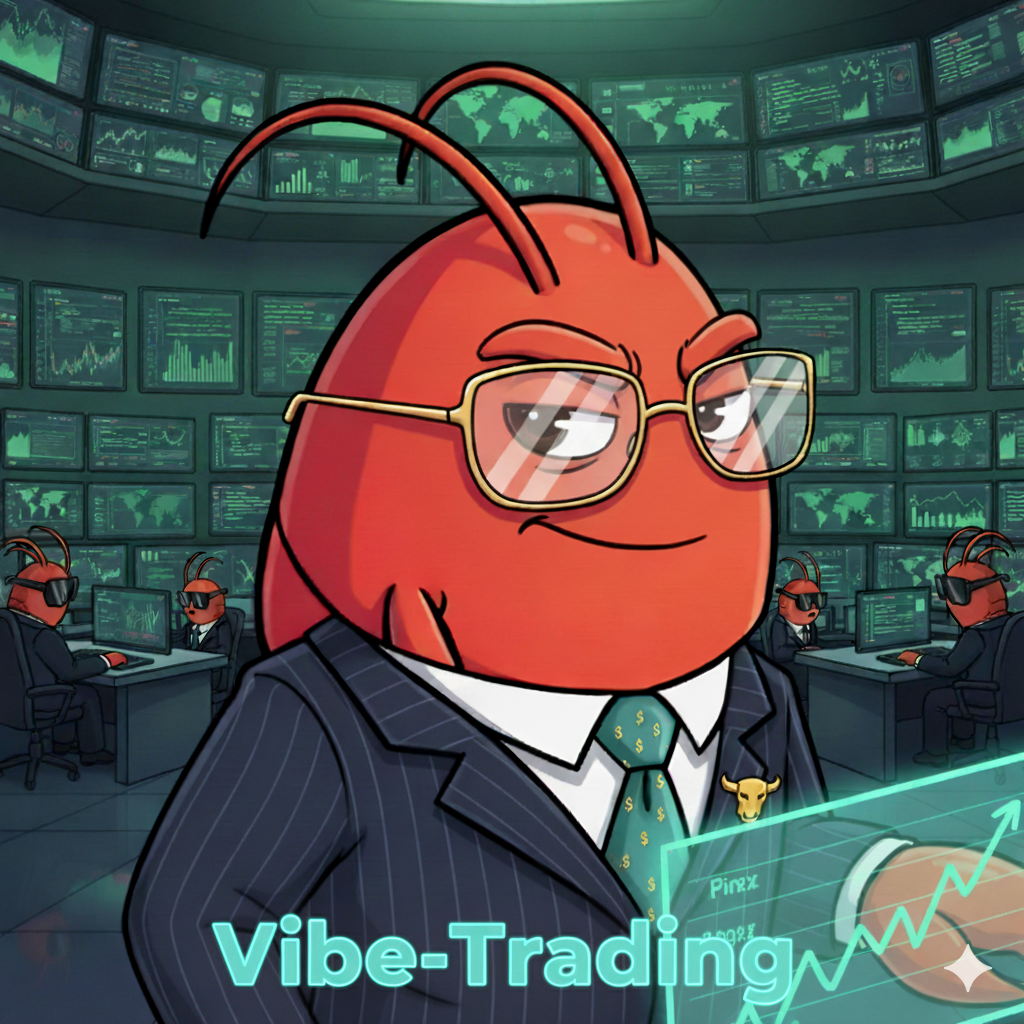
One Command to Empower Your Agent with Comprehensive Trading Capabilities
GitHub topic rankings by stars · Nov 4, 2026
#1 Backtesting ·
#3 Algorithmic Trading ·
#4 Quantitative Finance
Website · Docs · News · Features · Shadow Account · Demo · Quick Start · Examples · API / MCP · Roadmap · Contributors

YYYY-MM-DD range, the runtime constrains dates before acquisition; calculation warmup is requested separately, and existing indicator/backtest lookbacks remain available. On main, for the next pip release.
main, for the next pip release.
options_payoff calculate stock-plus-options strategies and compare multiple alternatives in one call, returning explicit costs, payoff bounds, and comparison directions. Effective backtest fees and truncation/error states remain explicit; live-trading authorization limits remain in place. Unreleased.
paper_trade_reconcile Agent/MCP tool (#2197).main, for the next pip release.
CF501 now use China futures rules (#2193).
Thanks @he-yufeng and @GPT-AGI! On main, for the next pip release.
local:BHP.AX or 7203.T) is now refused before any data is fetched instead of running on A-share rules; bare six-digit and .SS Shanghai codes still work. OpenRouter replies no longer show the model name twice (#2191), and an empty revision id in research-artifact export is now an error. Thanks @he-yufeng and @Gloubiboulgator! On main, for the next pip release.main, for the next pip release.main, for the next pip release.main, for the next pip release; public 5m requests still support one symbol per step.pip install -U vibe-trading-ai): research that outlives the chat — save versioned research artifacts with their evidence and revise them, reuse backtests from earlier turns and sessions, and edit a research goal in place. New opt-ins: a five-minute A-share paper simulation, and Gildata financial queries, stock screening and Shannon portfolio diagnosis (QVeris is removed; an existing GILDATA_TOKEN alone now enables nothing). Also Argentina (BYMA) backtests, Parallel web search, Codex OAuth model discovery, and both 0.1.18 regressions fixed. 116 merged pull requests plus 21 landed through maintainer commits, from 26 contributors (CHANGELOG).


Vibe-Trading turns finance questions into research reports, runnable backtests and paper portfolios. You can also authorize a supported broker to execute live trades within a mandate you set and can halt. Your funds stay with the broker.
| Task | Where to start |
|---|---|
| Research markets, filings or uploaded documents | Ask in Web chat or attach a report. |
| Backtest a strategy or benchmark alphas | Inspect charts and trades in Run Detail, or compare factors in /alpha-zoo. |
| Simulate trading or replay a journal | Track daily fills and NAV in /paper-trading. Use /journal and /shadow in the CLI to review your trades. |
| Combine accounts or compare allocations | Open /portfolio for holdings and proposed allocation changes. Broker support |
| Explore options and correlations | Open /options for multi-leg payoffs and Greeks, or /correlation for market regimes. |
| Coordinate or repeat research | Run a Swarm team, assign work in Pixel Office or schedule a brief in /scheduled. |
| Revisit research with dated evidence | Search /research-artifacts, compare any two revisions, and export a full series or selected comparison as JSON or Markdown. Versioned research |
Once you have run vibe-trading init, you can ask for a backtest in plain English or benchmark an existing alpha library from the terminal.
vibe-trading run -p "Backtest a BTC-USDT 20/50 moving-average crossover for 2024. Compare it with buy-and-hold and report maximum drawdown."
vibe-trading alpha bench --zoo gtja191 --universe csi300 --period 2018-2025 --top 20
Open Run Detail to compare the crossover with buy-and-hold, inspect the trades behind a drawdown and check the data source on the run card.
| Step | In the crossover example | |---|---| | Plan | Identify the trading pair, date range, moving averages and benchmark from the prompt. | | Ground | Fetch historical bars for BTC-USDT. Check the source and dates before interpreting the result. | | Execute | Write the strategy and run the backtest. The run directory holds the strategy, trades and equity curve. | | Validate | Compare the result with buy-and-hold. Inspect turnover, drawdown and validation warnings alongside return. | | Revisit | Open the saved run or ask a follow-up with different parameters. You can also save a dated research conclusion and revise it when new evidence arrives. |
The loader supports 28 market-data sources. With source: "auto", it infers the market from the symbol and tries the configured sources in order.
| Market | How a request is filled | |---|---| | A-shares and Hong Kong | Start with Tencent. If it cannot supply the bars, try Eastmoney and then the remaining sources for that market. | | US equities | Start with Yahoo. Stooq and Sina are the next two sources in the chain. | | Crypto | Try OKX, Binance and CCXT before falling back to other sources. | | Futures | Chinese contracts can use AKShare or local bars. Supply local bars for global contracts. |
You can also choose a source explicitly. For example, installing vibe-trading-ai[ashare] adds the token-free BaoStock loader for daily A-share bars. The data source reference lists the full chains and credential requirements.
| Feature | What you can do |
|---|---|
| Filings and holdings | Compare a manager’s SEC 13F holdings across quarters, or look through an ETF to its underlying positions. Each holdings report carries its reporting date. |
| Company valuation | Use /dcf to see how a valuation changes with the discount rate and terminal growth. Use /comps for peer multiples, or build a linked three-statement model and export the results to Excel. |
| Papers and documents | Search arXiv and OpenAlex for a signal, inspect the authors’ definition, then test it on your own universe. Upload a filing, spreadsheet or slide deck for questions about a specific exhibit. |
| Stock screening | With Gildata enabled, screen companies by market cap and retrieve half-year revenue in one request. Screening and portfolio factor diagnosis each have their own opt-in. |
| Feature | What you can do | |---|---| | Alpha Zoo | Benchmark signals from Qlib, Alpha101, GTJA and the academic and fundamental libraries. Compare information coefficients across horizons, then check whether the result survives a walk-forward test. | | Backtest engines | Model A-share price limits, crypto funding or futures margin. Use a shared capital pool for a cross-market strategy and inspect the individual fills behind its returns. | | Options Lab | Build a spread leg by leg. Compare its expiry payoff with the Greeks and see how the position responds to a change in spot price and implied volatility. | | Portfolio risk | Inspect drawdowns, estimate value at risk and expected shortfall, or use Brinson attribution to separate allocation from stock selection. The correlation view shows when markets start moving together. | | Strategy tracking | Register a strategy with its evidence and track how its Sharpe ratio or factor information coefficient changes as new results come in. |
| Feature | What you can do |
|---|---|
| Portfolio | Bring read-only broker holdings into one snapshot or import an extraETF export. Enter target weights to preview the value change for each holding. |
| Paper trading | Advance a saved account one trading day and inspect fills, cash and NAV. You can also replay an A-share session in five-minute steps in a separate simulation. The paper_trade_reconcile agent/MCP tool independently checks fees, cash, positions and NAV arithmetic without market or broker access. |
| Shadow Account | Import your broker’s trade journal, inspect fees and trading habits, then compare the actual trades with a rule-based replay. |
| Broker connections | Set up a connection in the CLI or Web and test it with a read. For supported live profiles, set symbol, order and exposure limits before enabling trading. The kill switch halts live activity. |
| Feature | What you can do | |---|---| | Swarm and Pixel Office | Run a bull–bear investment committee or a quant research desk and inspect the workers’ reports. In Pixel Office, assign a task to a teammate and record the result on the shared board. | | Scheduled briefs | Start from a premarket brief, an earnings tracker or a portfolio checkup. Choose a schedul
→ →
 →
 →
 →
 →
 →
 →