1
 →

ConardLi's open-source Skills collection, featuring web design, knowledge retrieval, image generation, and more.
ConardLi/garden-skills is an open-source project on GitHub, mainly written in JavaScript. ConardLi's open-source Skills collection, featuring web design, knowledge retrieval, image generation, and more. It currently holds 15,061 stars and 1,724 forks with 26 open issues, and was last pushed on 2026-11-08 (repository created 2026-04-21).
Git Homed tracks it on the Today's Trending board.
A curated collection of production-ready Agent Skills for Claude Code, Cursor, Codex, and other AI coding agents.
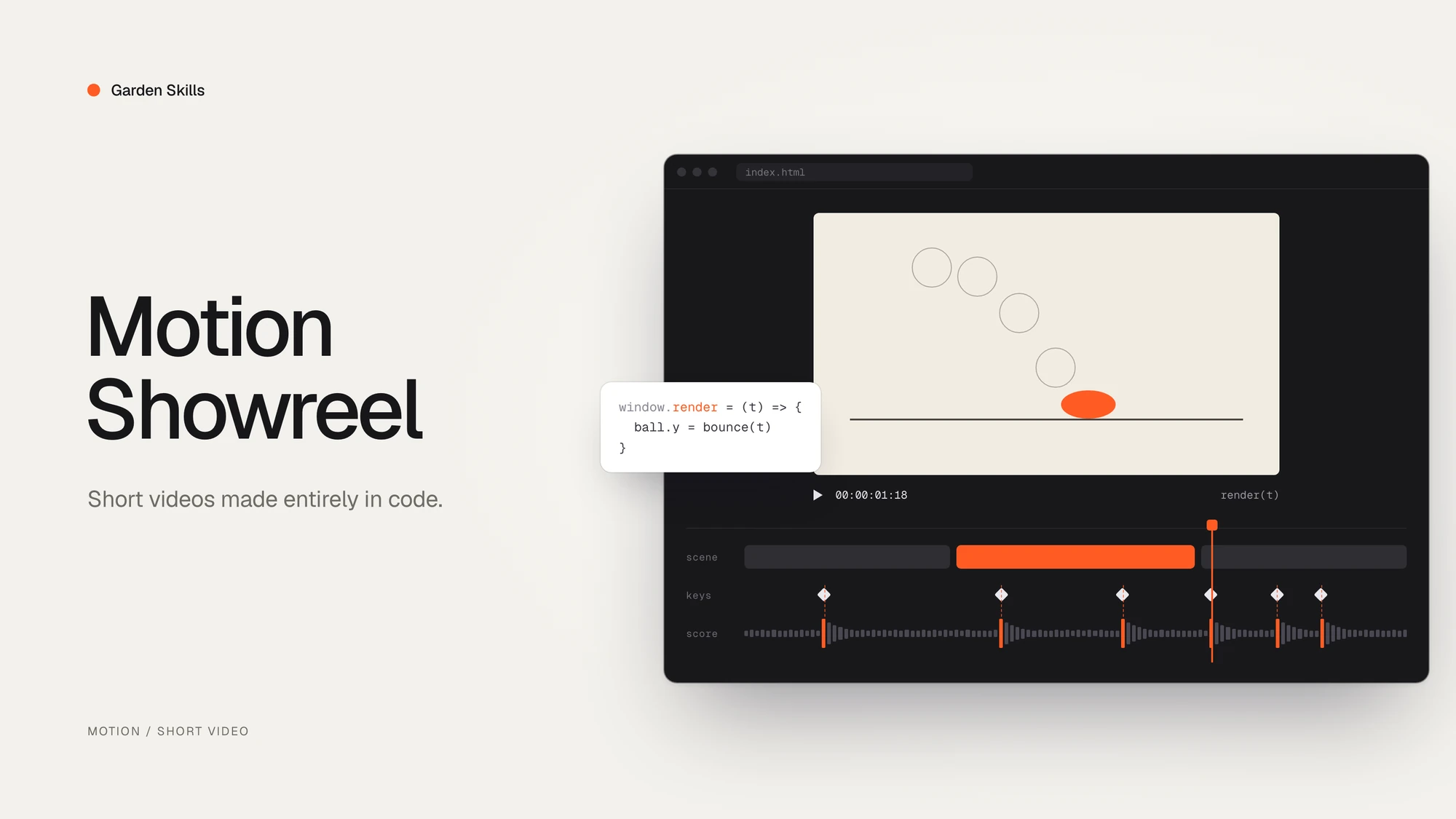
motion-showreel Code-rendered short video |
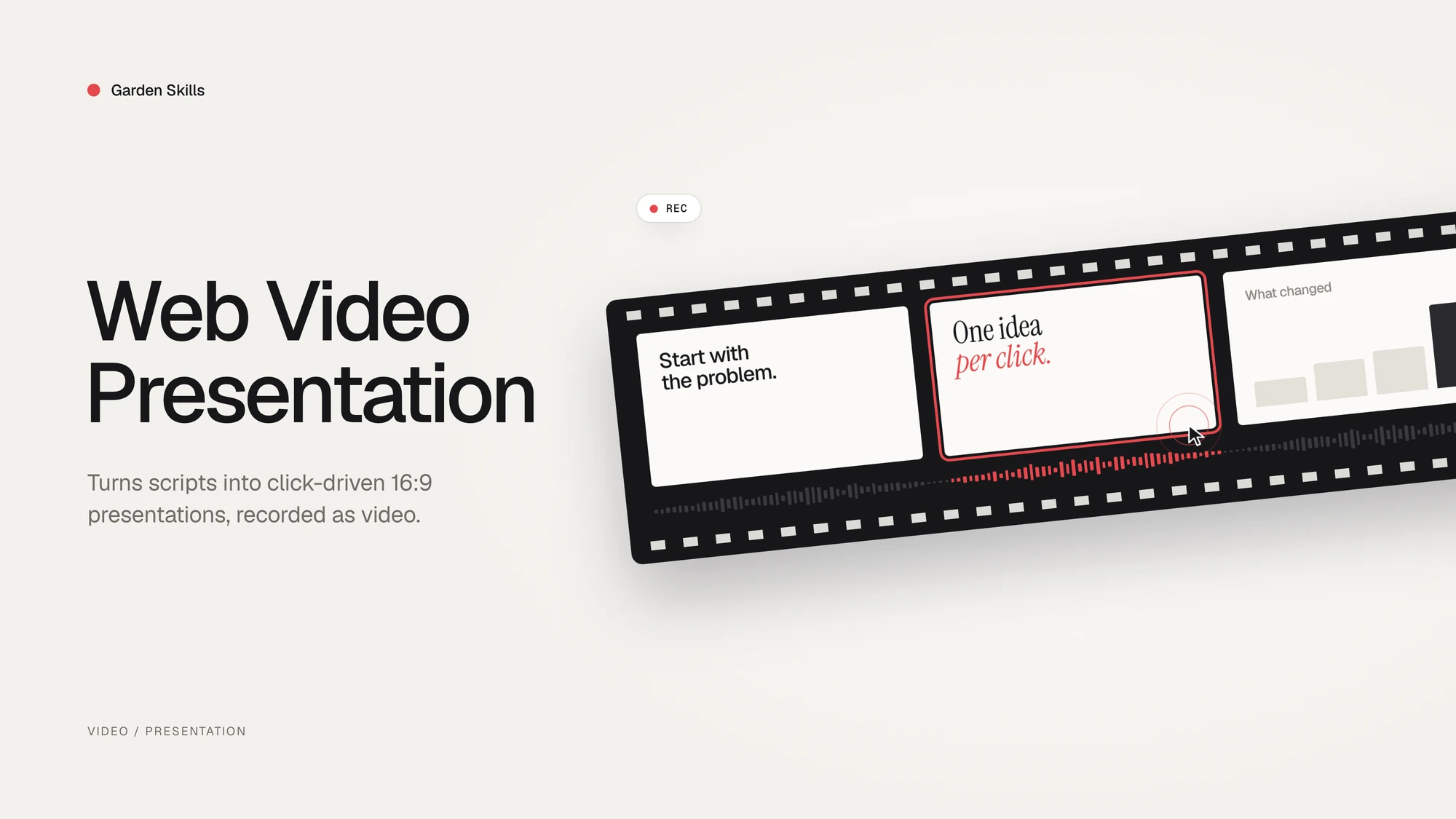
web-video-presentation Web video / presentation |
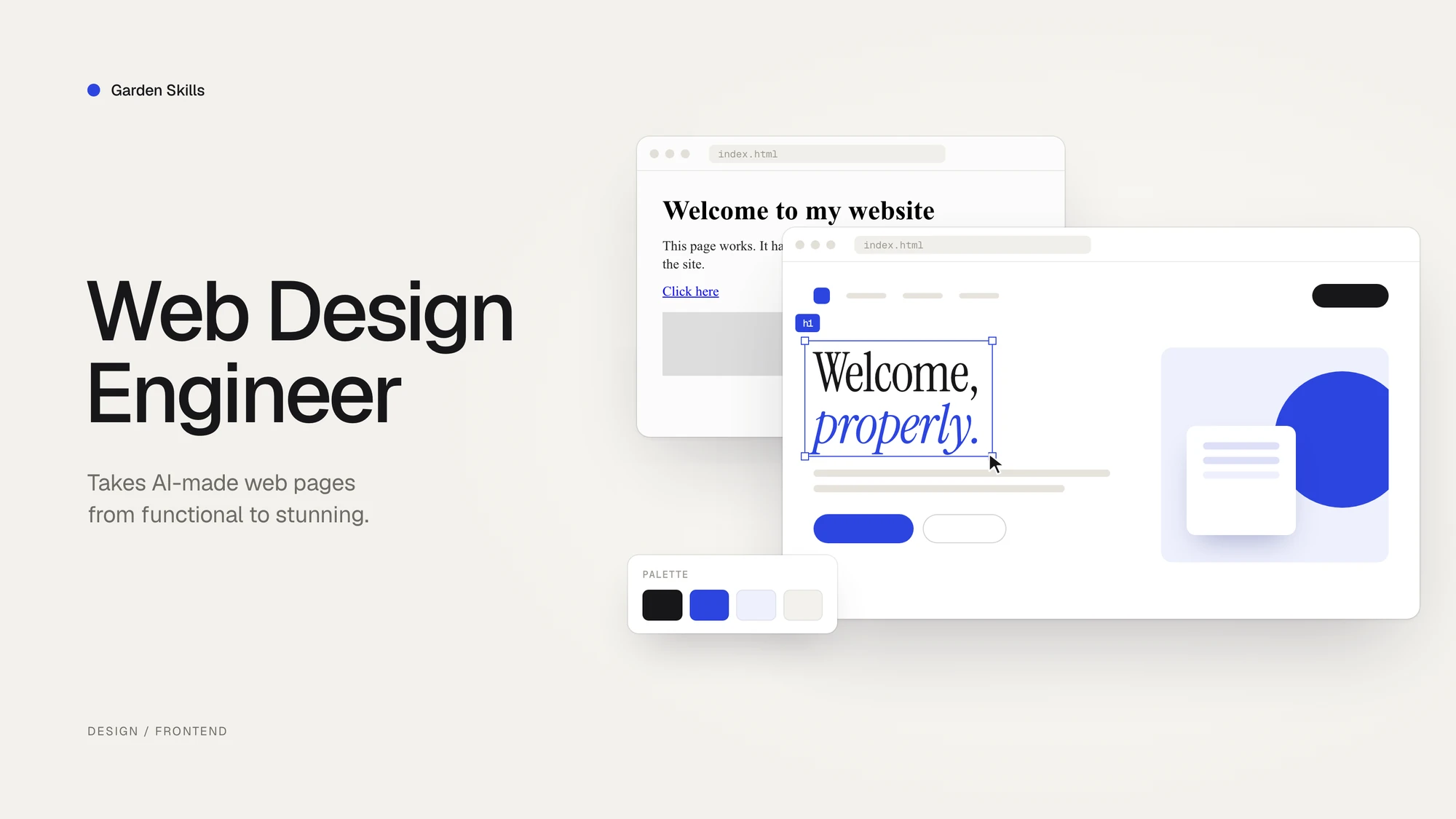
web-design-engineer Design / frontend |
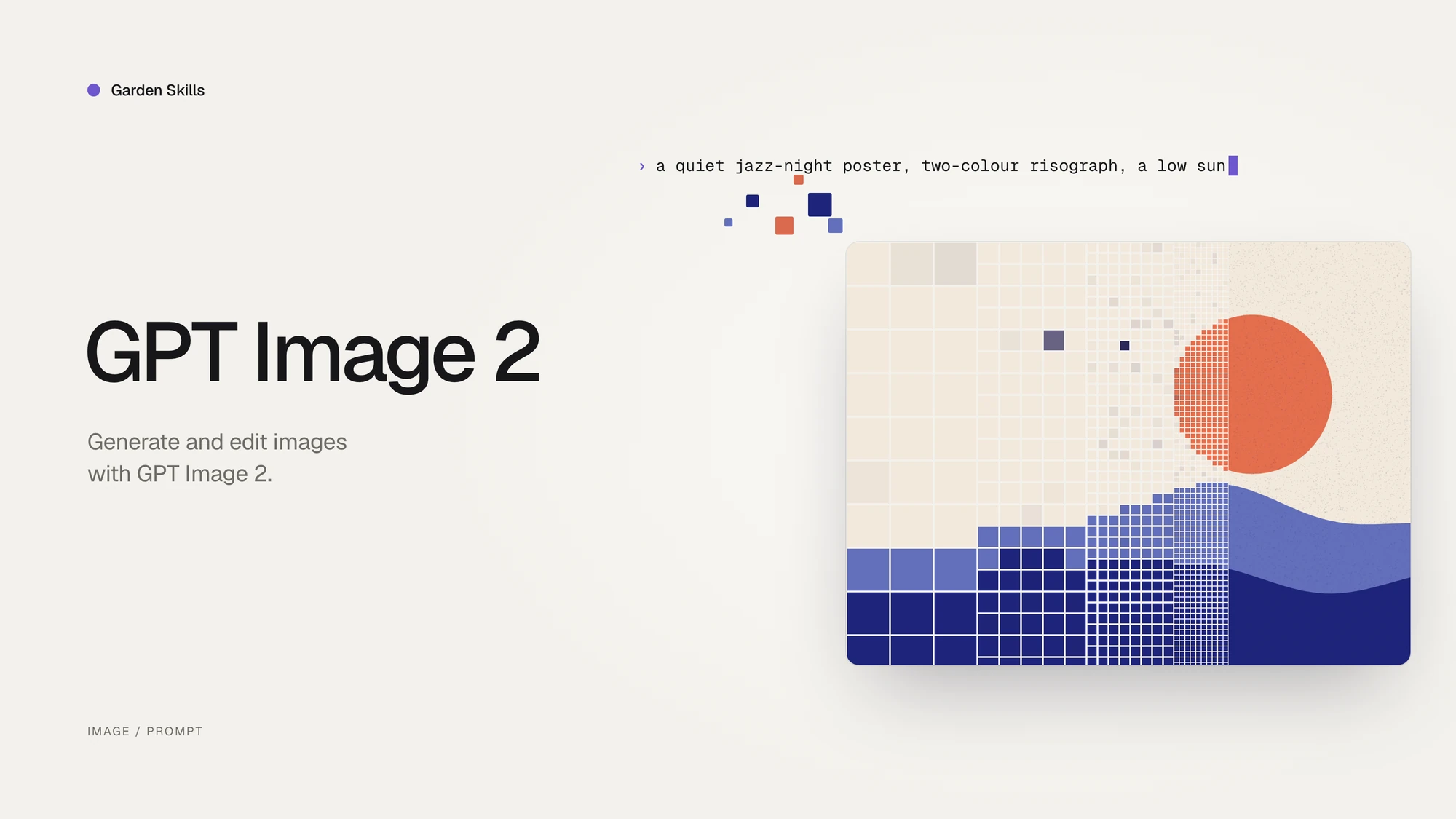
gpt-image-2 Image generation / prompting |
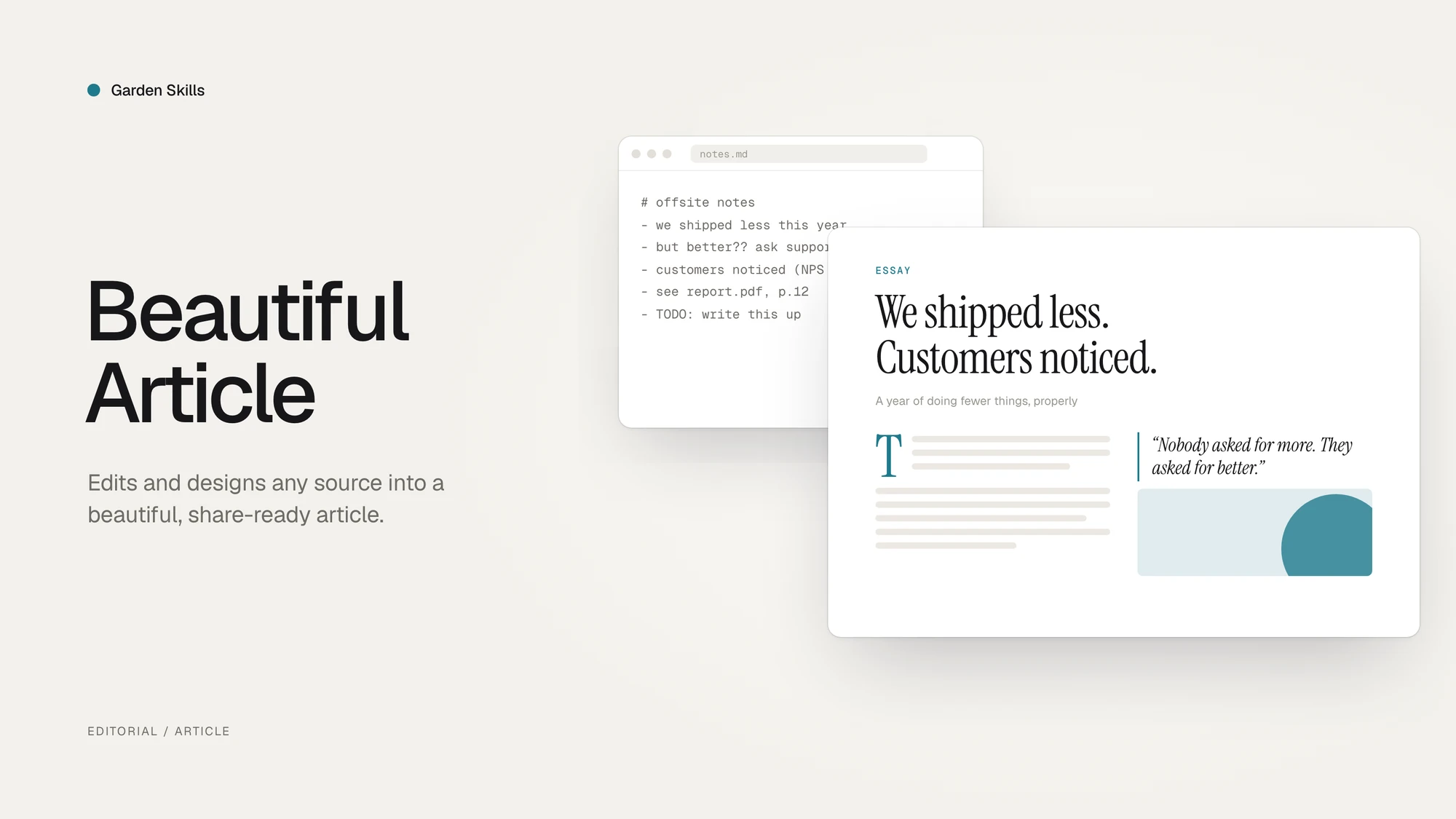
beautiful-article Any source → beautiful article |
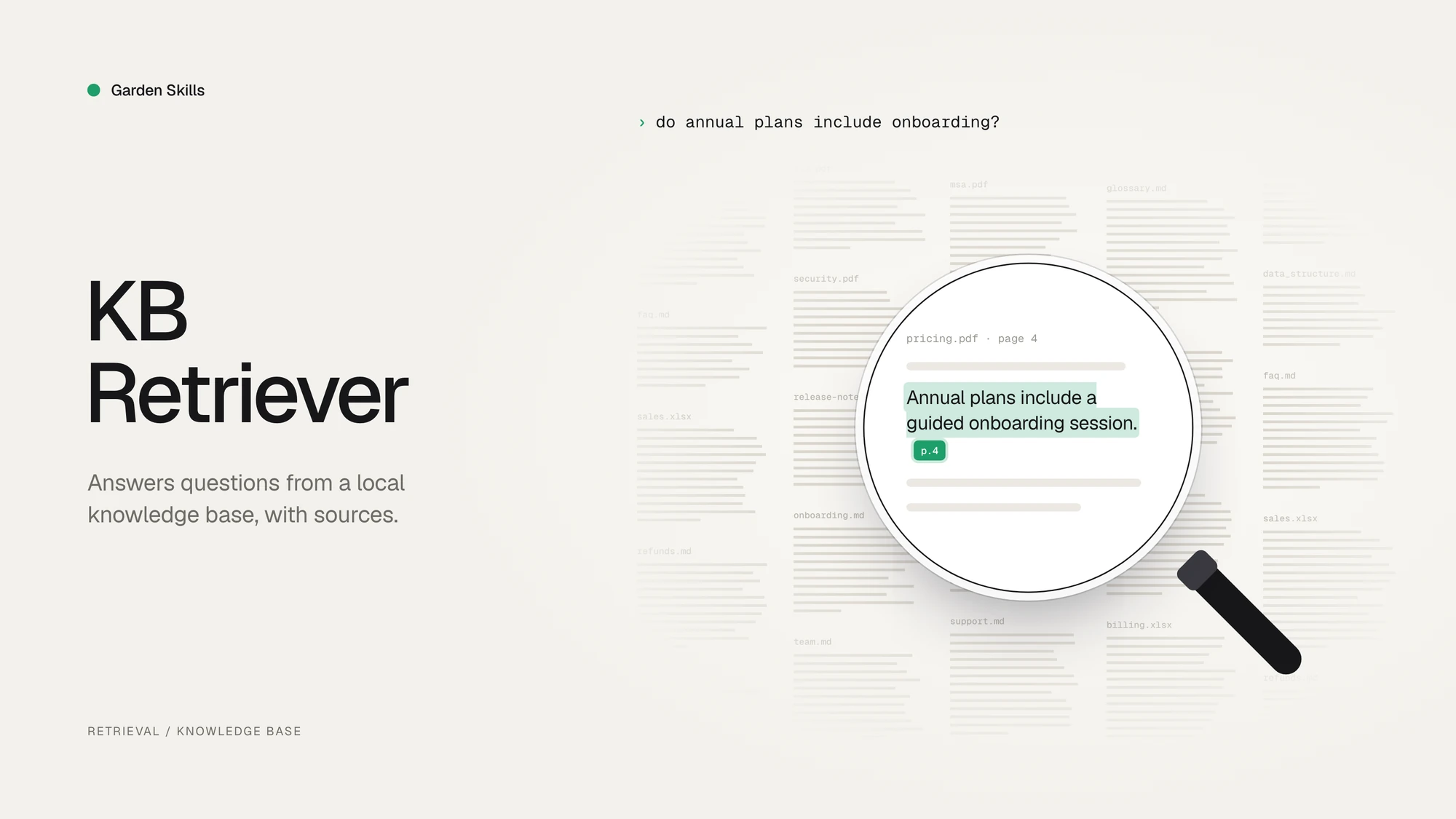
kb-retriever Local knowledge retrieval |
🌸 Model API service: Token Secret Garden
> API access to GPT, Claude, Gemini, and other leading models at discounted rates, with direct access from mainland China, Alipay top-ups, and invoicing.
---
| Install | Use | Contribute |
|---|---|---|
| Installskills CLI (npx)
Claude Code plugin marketplace
Pinned .zip from Releases
Manual copy
Git submodule | Compatibility
What is a Skill? | Contributing
Acknowledgments
License |
---
motion-showreel
Category: Motion Graphics / Code Video
Best for: showreels, product films, UI motion, kinetic typography, logo/title sequences, generative loops, retrospectives and narrated explainers. Short pieces typically run 5–60 s; chapter-based films support up to 20 minutes.
motion-showreel delivers MP4 plus editable source. It confirms the topic, duration, orientation, independent music/SFX sources and narration mode, then writes a brief and confirms style frames. Deterministic render(t) pages are captured frame by frame on a shared audio/picture timeline. Narration follows a user-supplied script or recording; pictures follow actual speech timings. Long films use persistent chapter caches and technical acceptance.
Highlights:
render(t) pipeline: stills, contact sheets, three-direction boards, proxies and masters all come from the same page. Motion blur, supersampling and film grain are render flags. synthwave-neonalbum title |
 soft-3d-toychain reaction |
 stick inkgame trailer |
 cinematic-titlefilm opening |
↑ 4-second excerpts of pieces made with the skill. Open the showcase for the full set, including the skill's own 80-second trailer and the style gallery.
Links: README · SKILL.md · Download v0.2.0 .zip
---
web-video-presentation
Category: Web Video / Presentation Engineering Best for: turning scripts, articles, lessons, product demos, and talks into click-driven 16:9 web presentations that can be screen-recorded as cinematic videos.
web-video-presentation builds record-ready Vite + React + TypeScript presentations that behave like video production surfaces. The workflow turns raw articles into narration scripts, maps script beats to full-screen scenes, pauses at required checkpoints, and can optionally synthesize narration audio after the visual outline is approved.
Highlights:
(chapter, step) cursor, with one narration beat per visual stepmmx-cli + OpenAI TTS via curl) plus a contract + ready-to-paste snippets for ElevenLabs / edge-tts / Azure / Google Cloud / macOS say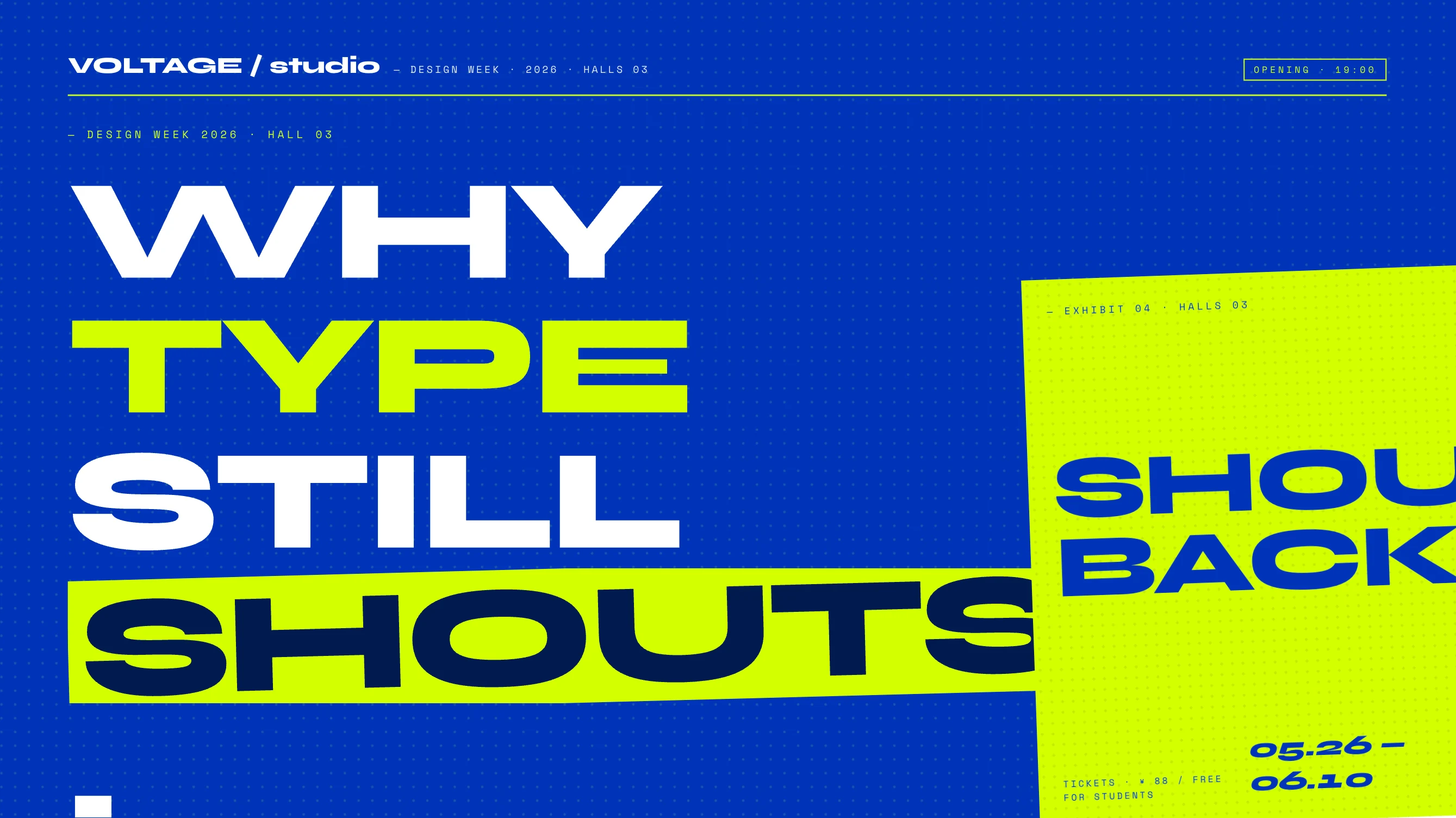 creative-voltagecreative talks |
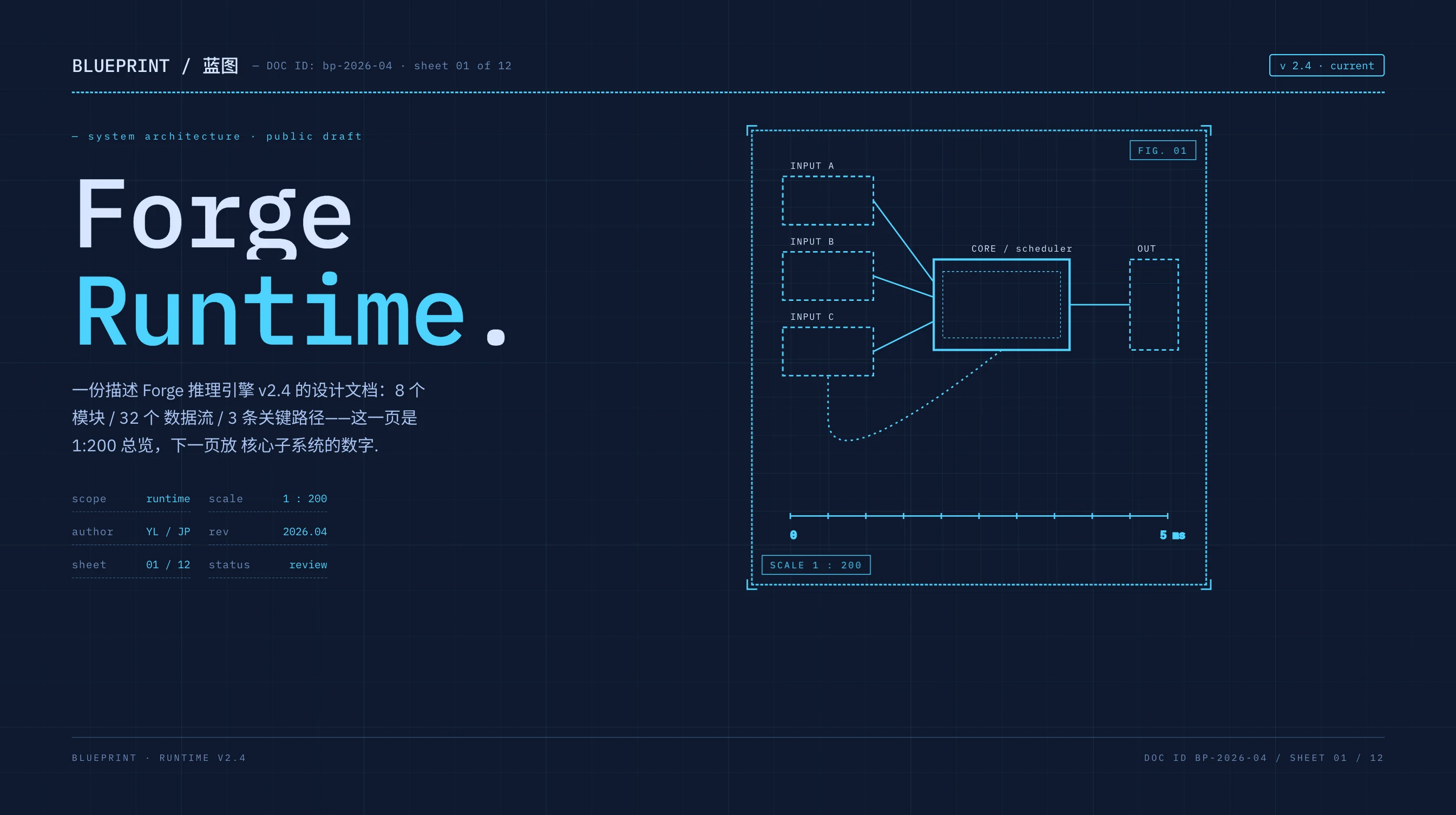 blueprinttech architecture |
 swiss-ikbdata reports |
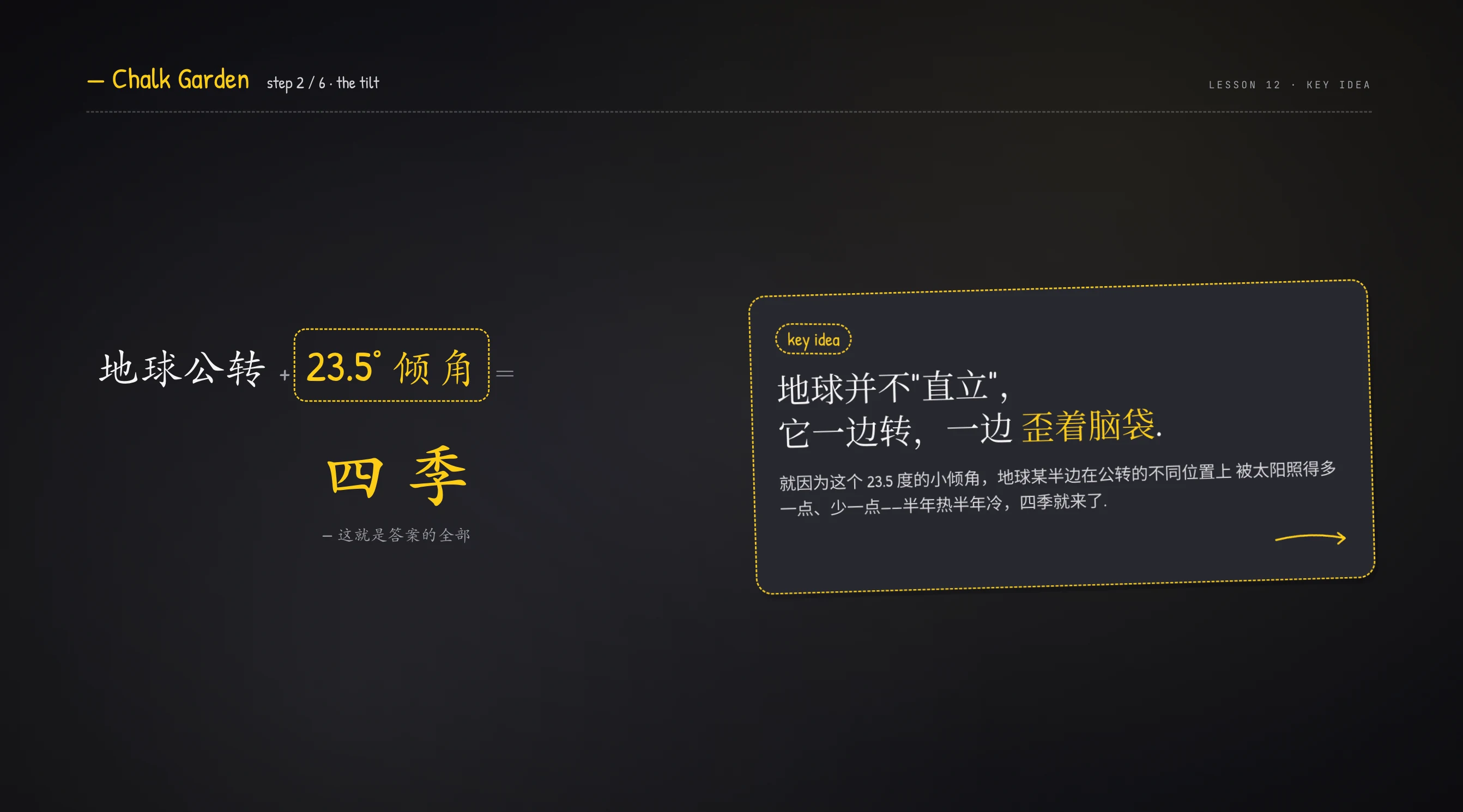 chalk-gardenpopular science |
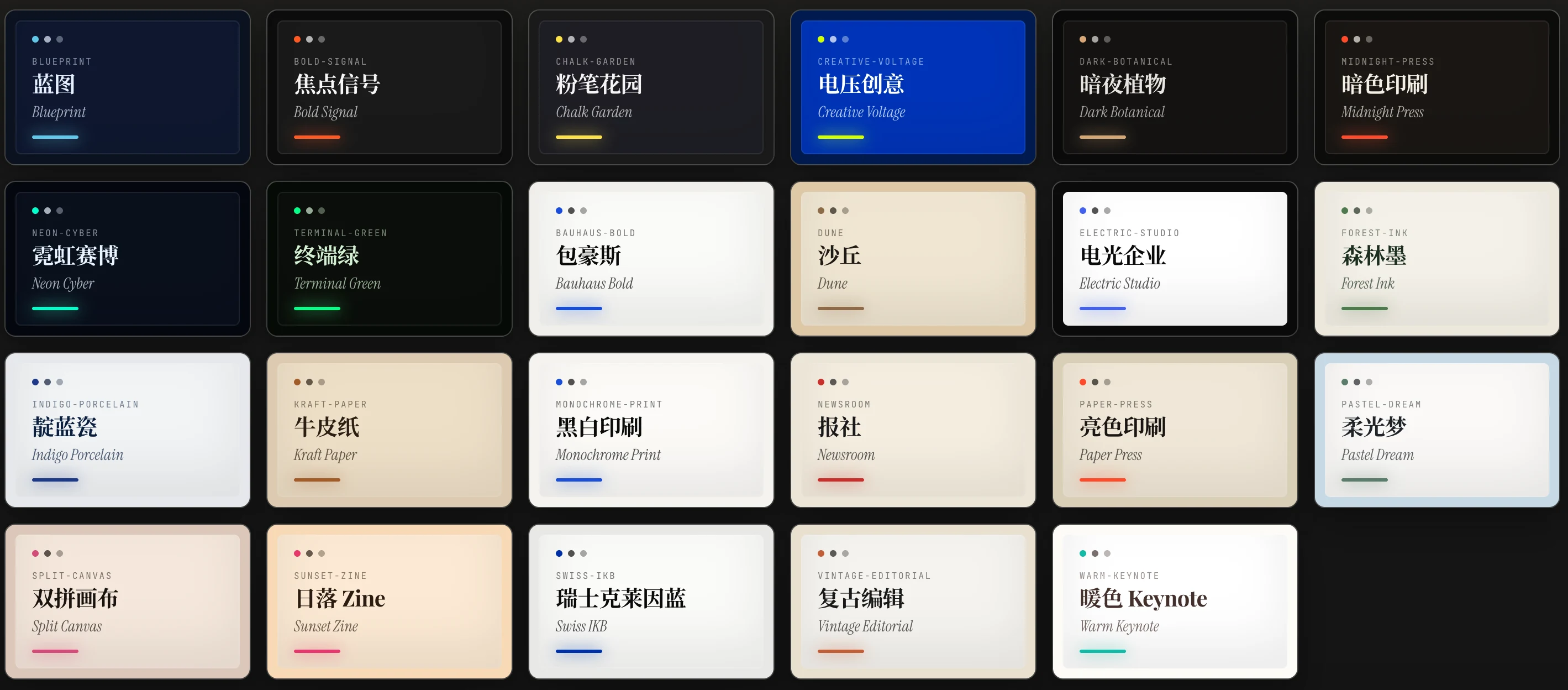
↑ All 23 themes at a glance — open the full gallery for live 16:9 previews, design signatures, and best-for tags.
Links: README · SKILL.md · Download v1.2.2 .zip
---
web-design-engineer
Category: Design / Frontend Best for: web pages, landing pages, dashboards, interactive prototypes, HTML slide decks, animations, UI mockups, data visualizations, and design-system explorations.
web-design-engineer turns AI-generated web artifacts from merely functional into polished, deliberate, and visually memorable front-end work. It treats the agent as a design engineer: first understanding product context, then declaring a design system, showing an early v0, building the full experience, and verifying the result.
Highlights:
oklch() color work, container queries, and reduced-motion handling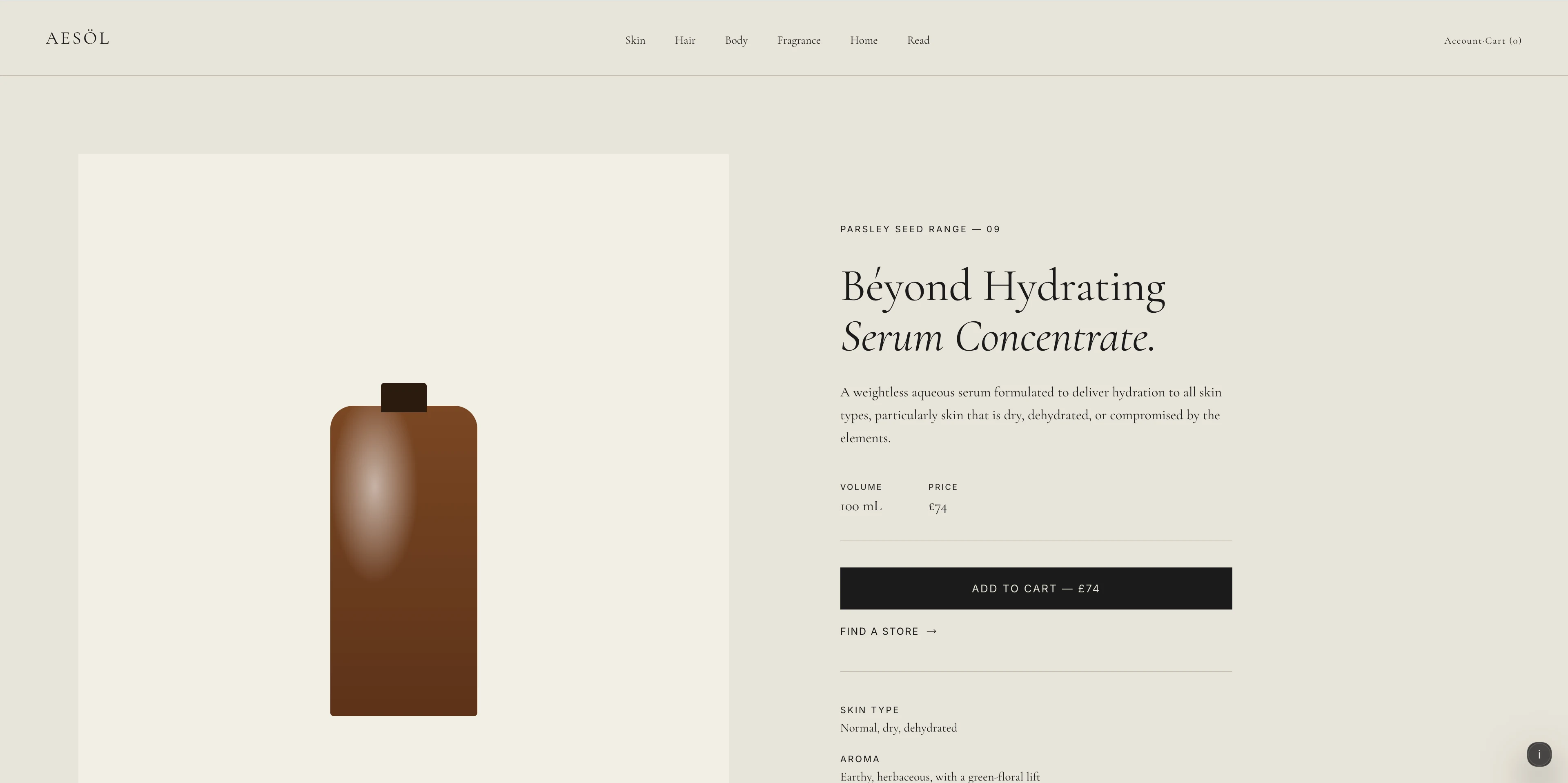 aesopapothecary pages |
 muji-kenya-haraobject catalogues |
 monocle-magazinemagazine contents |
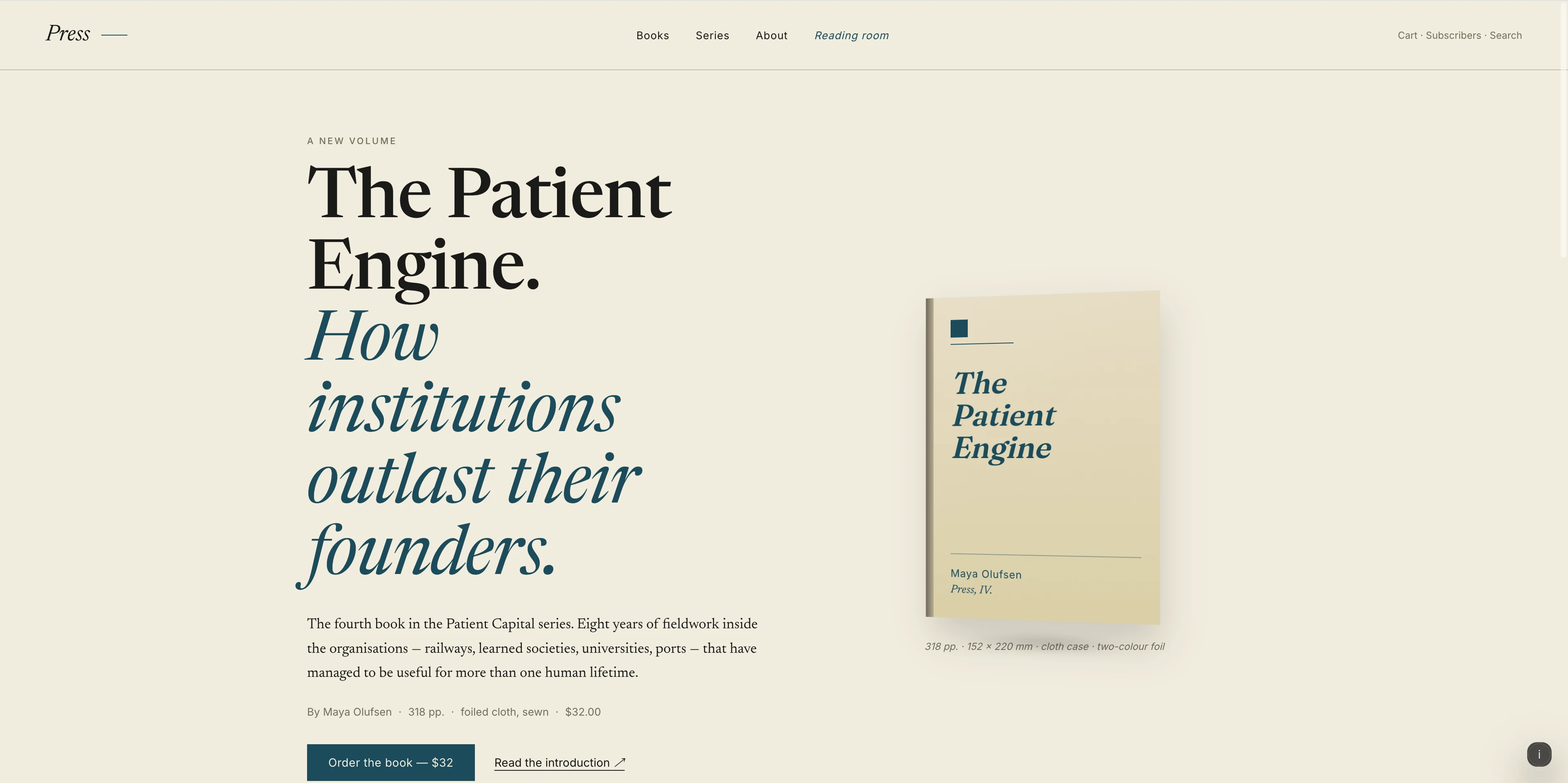 stripe-pressbook detail |
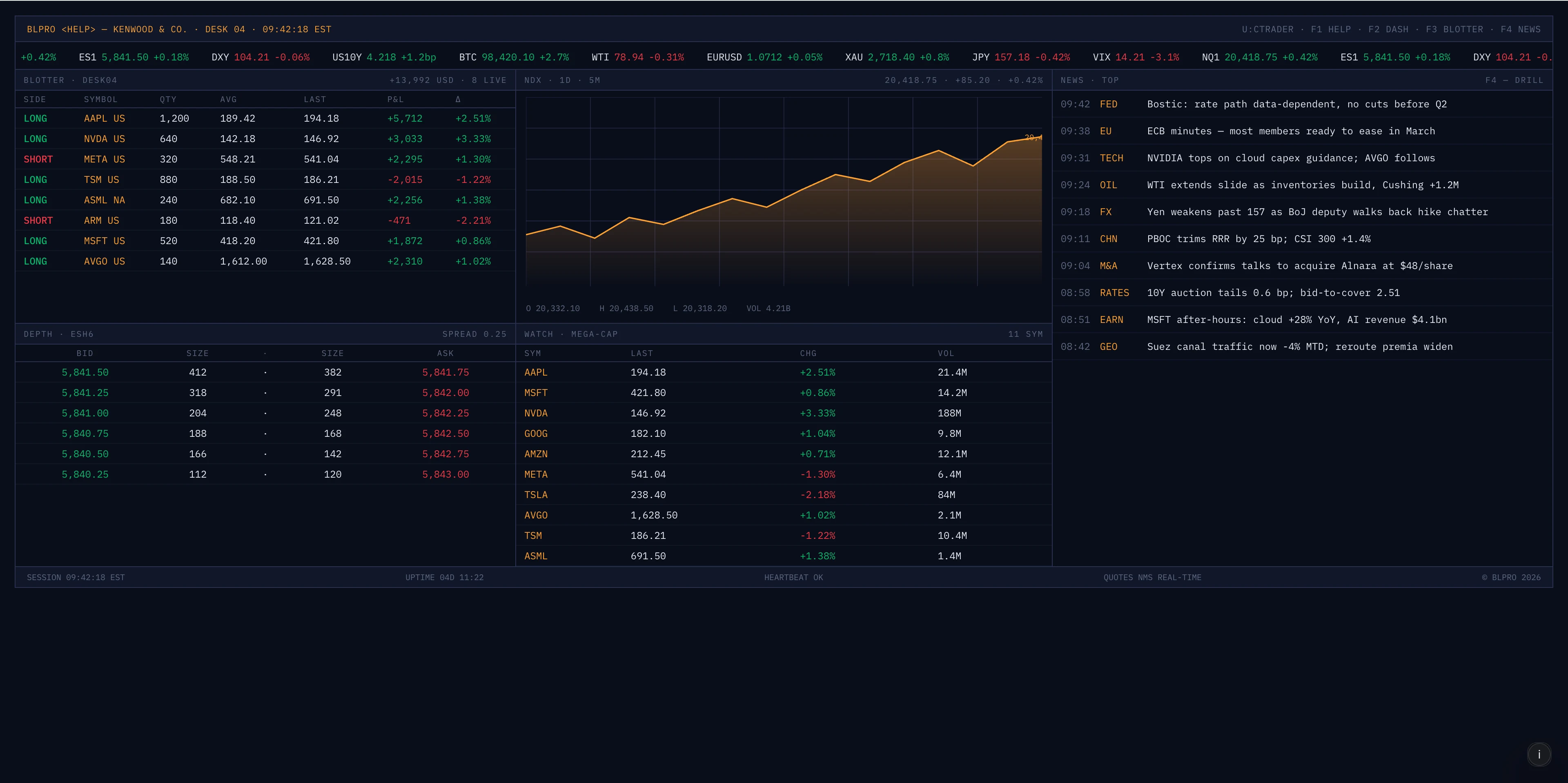 bloomberg-terminaltrading dashboards |
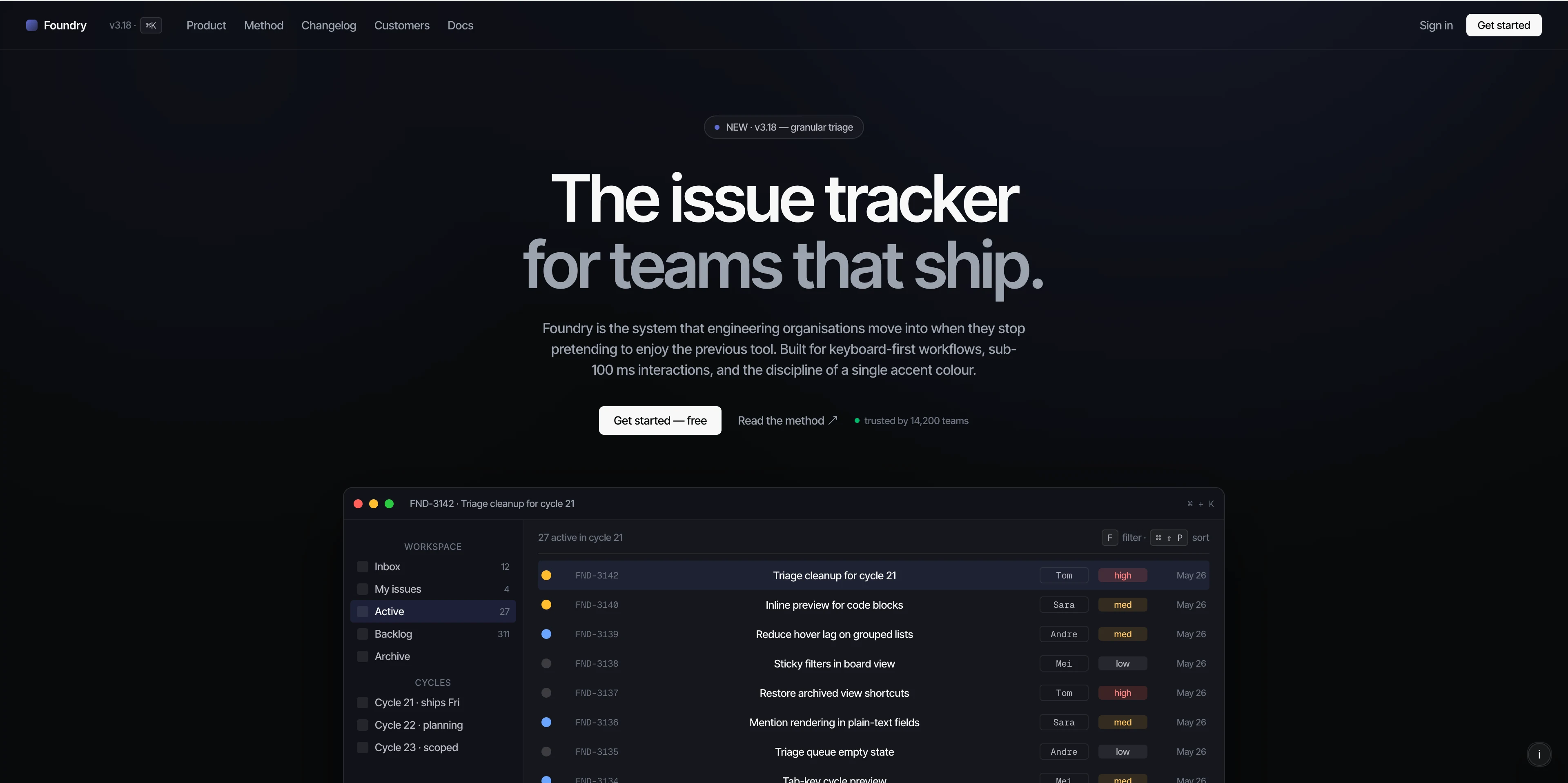 lineardev tool landing |
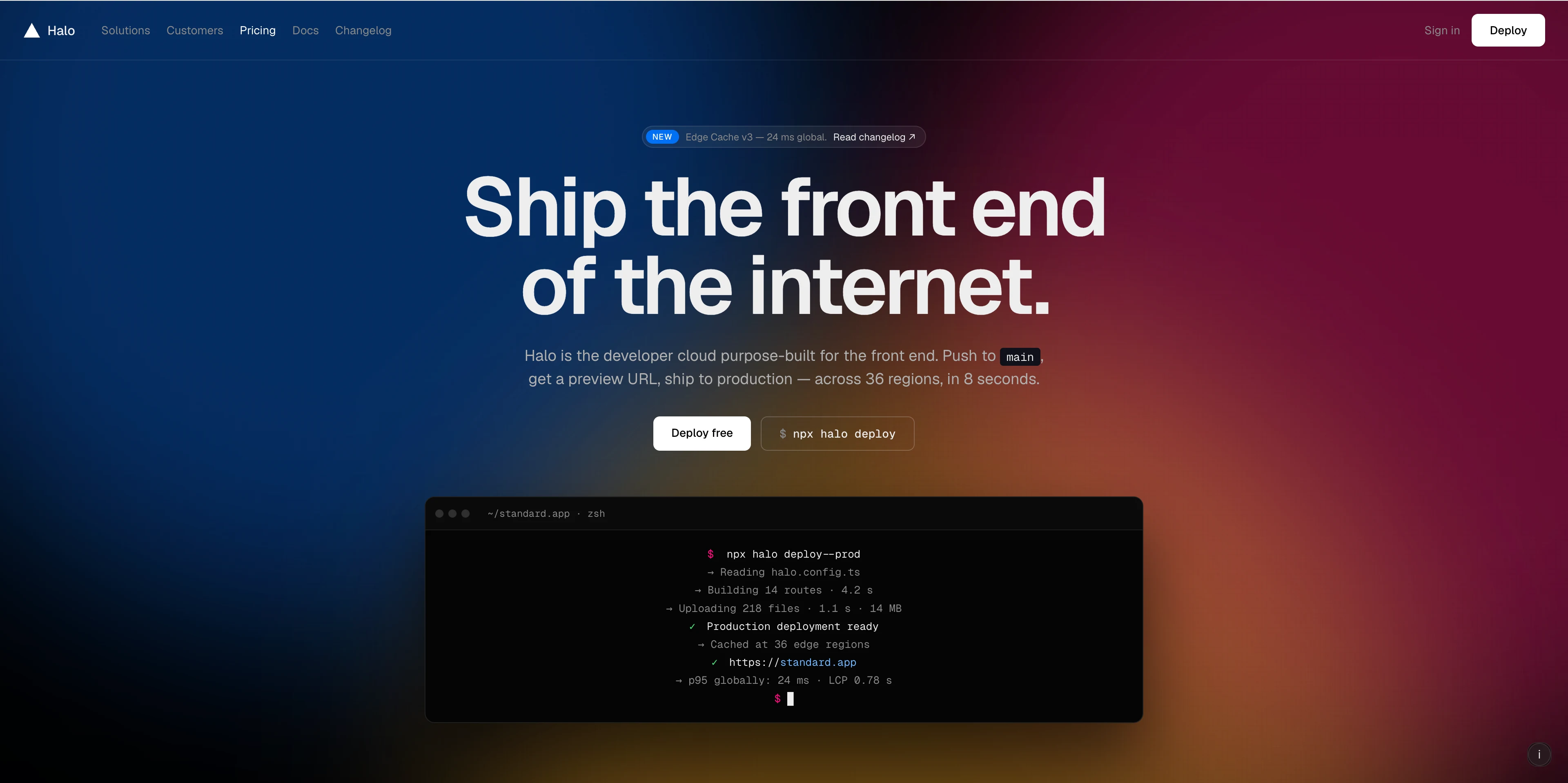 vercel-meshdeploy hero |
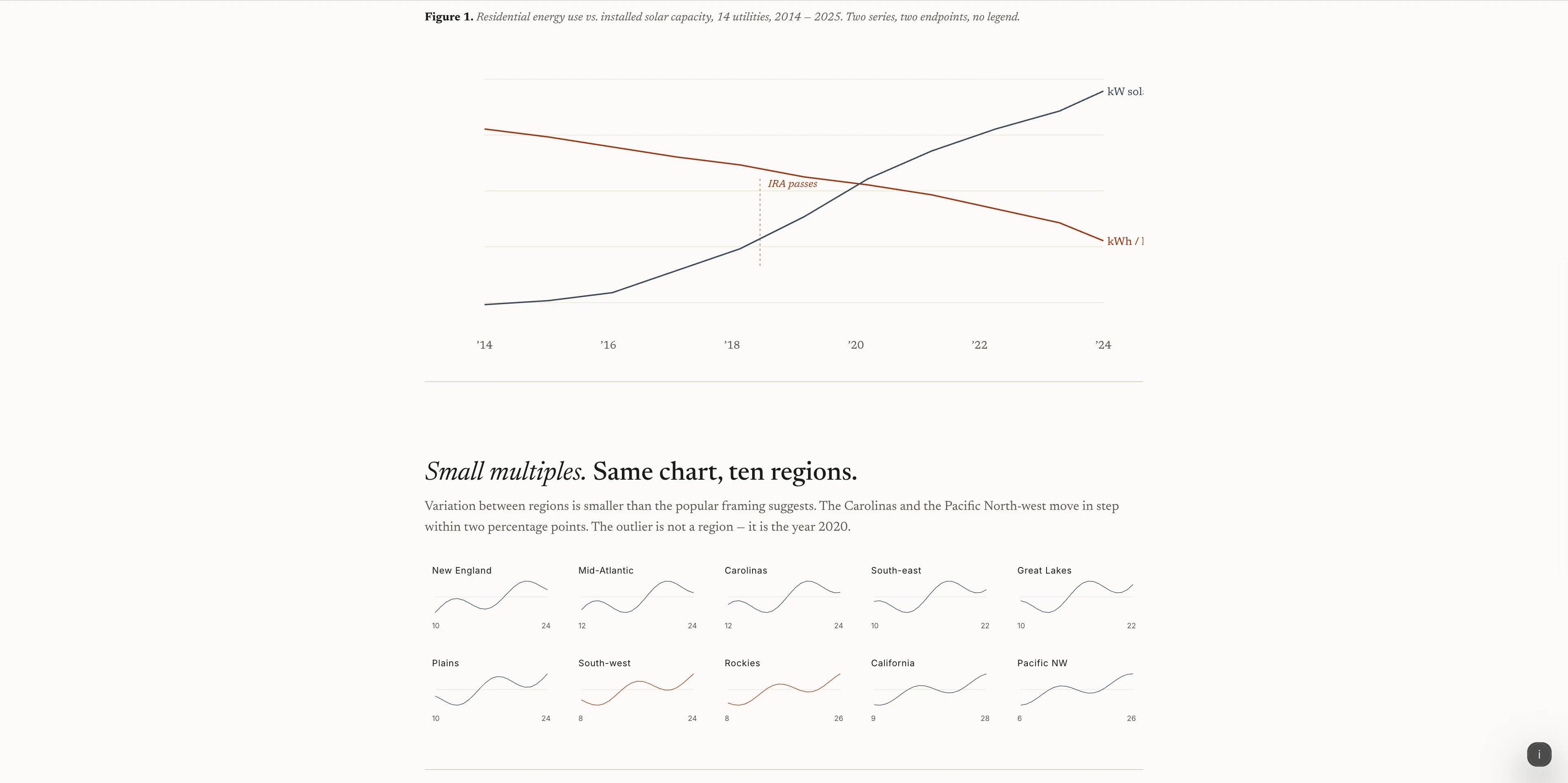 tufte-datainkdata narratives |
 mid-century-modernposter homage |
 y2k-retrofuturismY2K portal |
 businessweek-turleyeditorial covers |
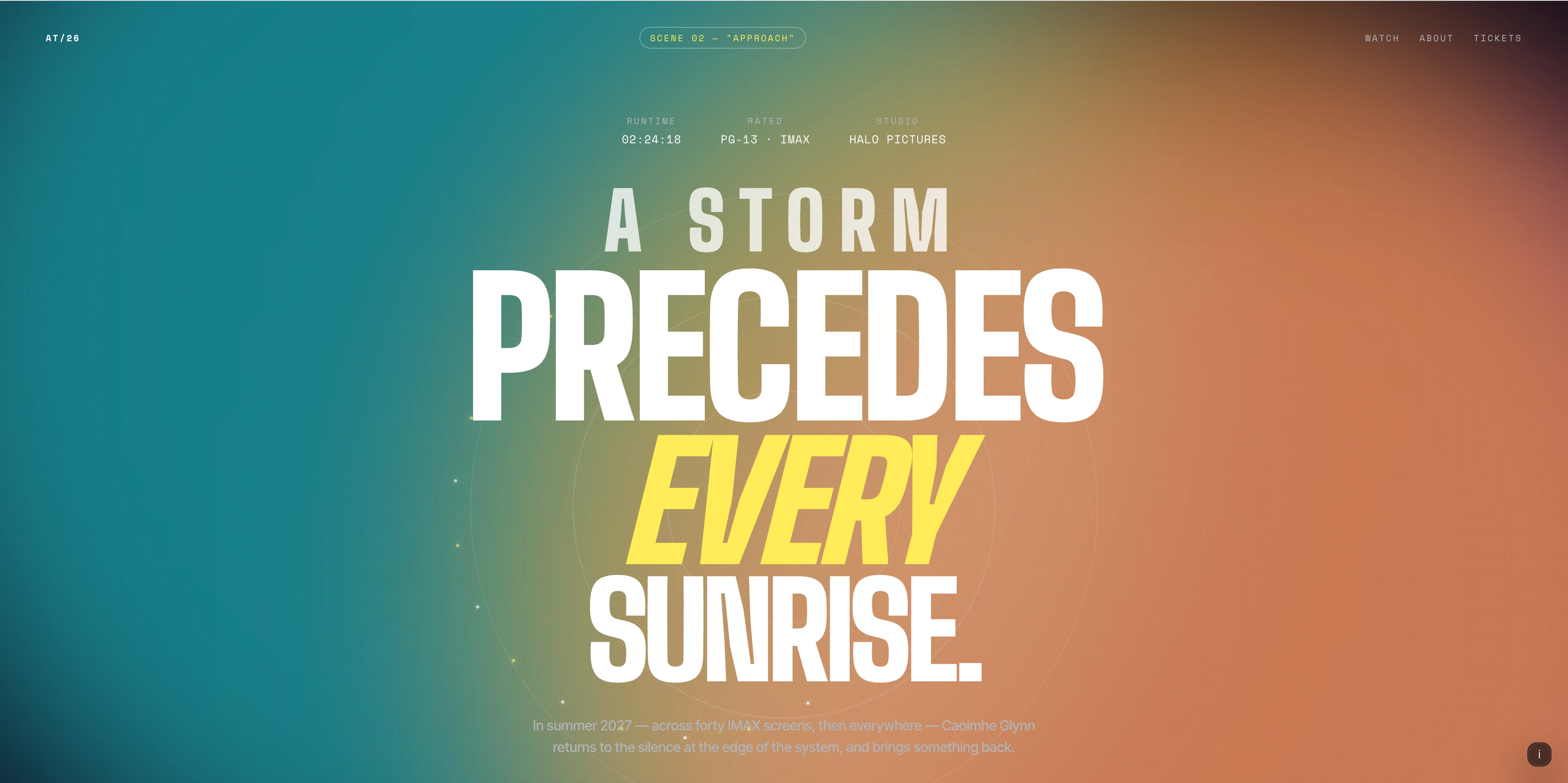 active-theorycinematic launch |
↑ 12 of 25 anchored recipes — open the full gallery for all 25 working artefacts (apothecary pages, trading workstations, magazine covers, Y2K portals, mid-century posters …) with signature moves and best-for tags.
Links: README · SKILL.md · Website · Demo · Download v1.3.0 .zip
---
gpt-image-2
Category: Image Generation / Prompt Engineering Best for: posters, UI mockups, product visuals, infographics, academic figures, technical diagrams, comics, avatars, storyboards, branding boards, and image-editing workflows.
gpt-image-2 is a focused image-generation skill for GPT Image 2 and OpenAI-compatible image APIs. It is designed to work across different agent environments: fully local Garden generation, host-native image-tool delegation, or prompt-only advisor mode when no image tool is available.
Highlights:
references/garden-gpt-image-2/ in Garden mode for reuse, review, and versioning
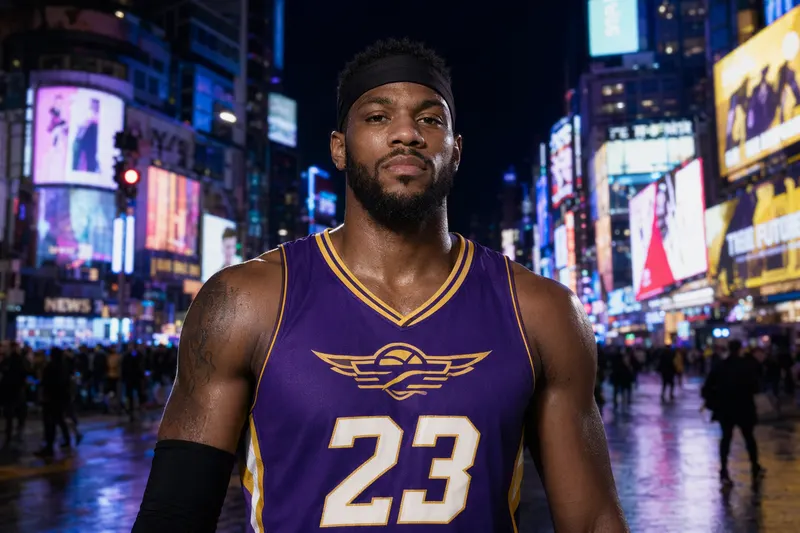 background-replacementPortrait edit with Times Square relighting. |
 chat-interface-sceneClaude-style assistant product screenshot. |
 live-commerce-uiCelebrity livestream commerce interface. |
 product-card-overlaySkincare landing-page hero. |
 bento-grid-infographicHigh-density iPhone 16 Pro explainer. |
 system-architectureMulti-tenant AI SaaS production diagram. |
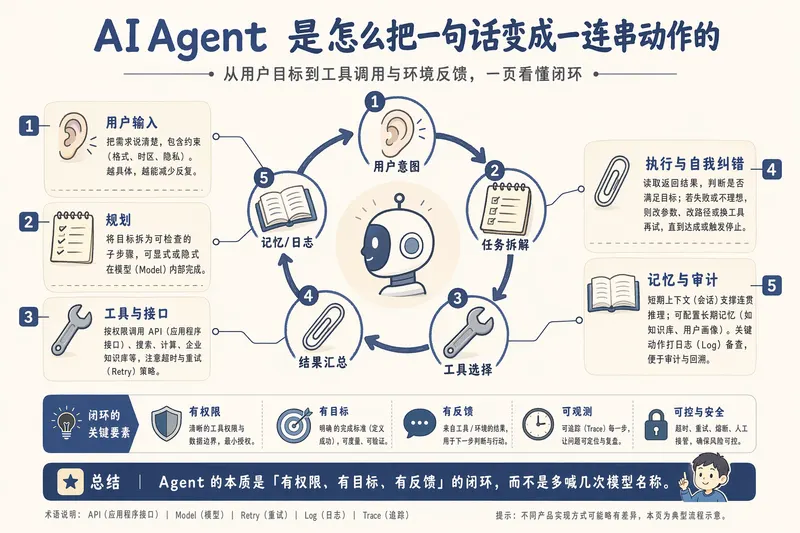 dense-explainer-slidesAI Agent mechanism in one page. |
 food-mapCity-walk editorial food guide. |
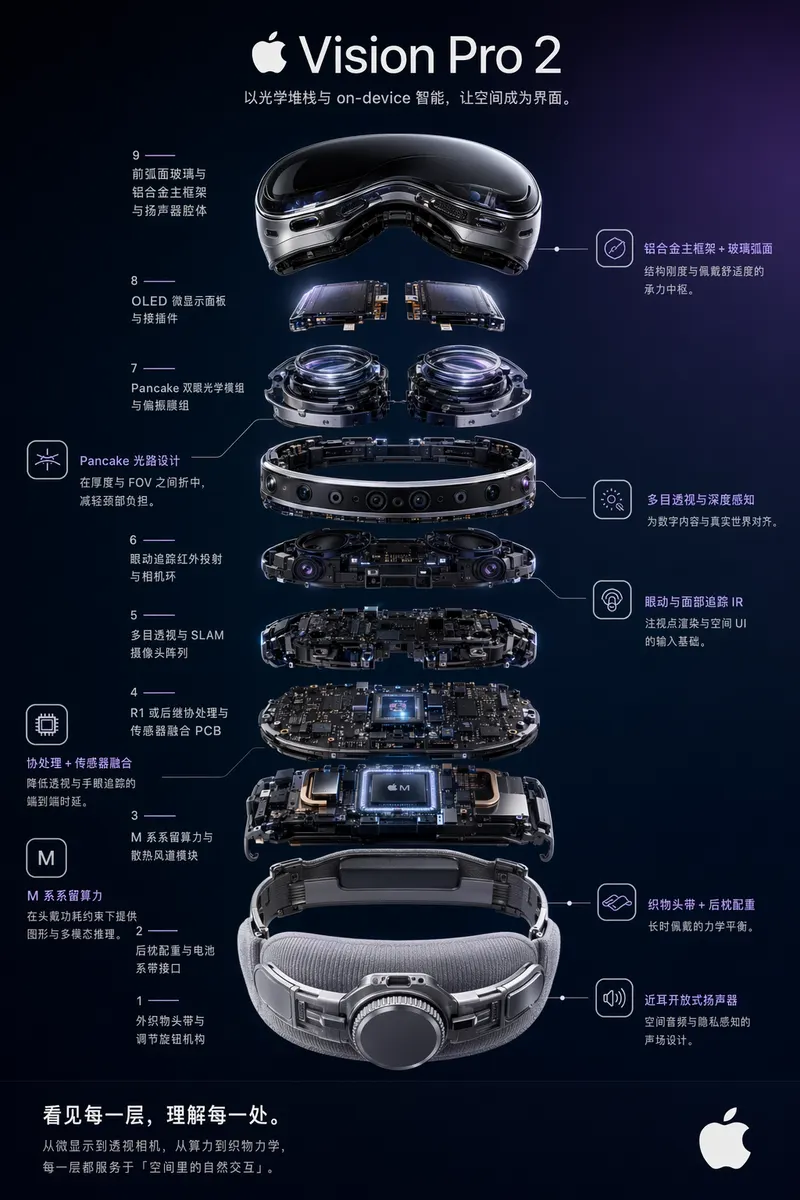 exploded-view-posterVision Pro 2 optical and compute teardown. |
 neural-network-architectureViT-B/16 model figure for papers. |
 cosmetic-packagingPremium skincare gift-box composition. |
 anime-key-visualGame-launch key art with crop-safe layout. |
↑ 12 selected cases from the 160+ public case library — open the skill gallery for more templates, or browse the live website.
Links: [README](./skills/gpt-image-2/R
→ →
 →
 →
 →
 →
 →
 →